

In an era where industrialised digitalisation projects are frequently delayed by integration complexity, Brainboxes has demonstrated how AI-ready documentation can reduce development timelines from weeks to minutes.
In a recent product demonstration, Luke Walsh, Managing Director of Brainboxes, showcased the company’s revamped open-source C# .NET API and online documentation. Clearly structured and machine-readable documentation allowed AI coding assistants to interpret it, generate application architecture, and deploy a functional industrial monitoring solution in approximately 15 minutes.
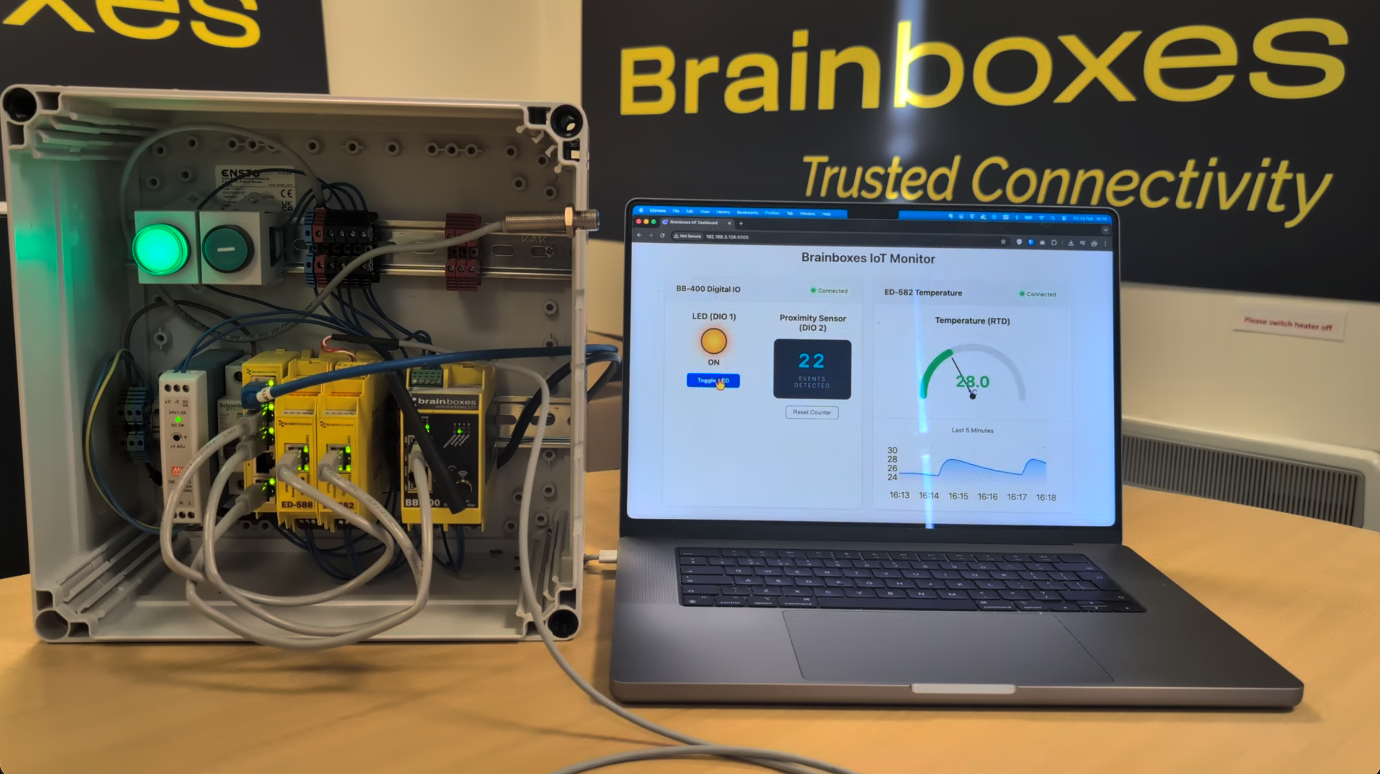
The demonstration featured the BB-400 industrial edge controller and an ED-582 remote I/O module with an RTD temperature sensor. The BB-400 was connected via digital I/O to a push button, LED indicator, and proximity sensor, while the ED-582 captured temperature readings. Using Visual Studio Code and an AI assistant, Walsh provided a text prompt outlining IP addresses, I/O mappings, functional requirements, and a link to Brainboxes’ .NET API documentation. He also specified resilience requirements, ensuring the system could tolerate devices moving online and offline to reflect real-world plant-floor conditions.
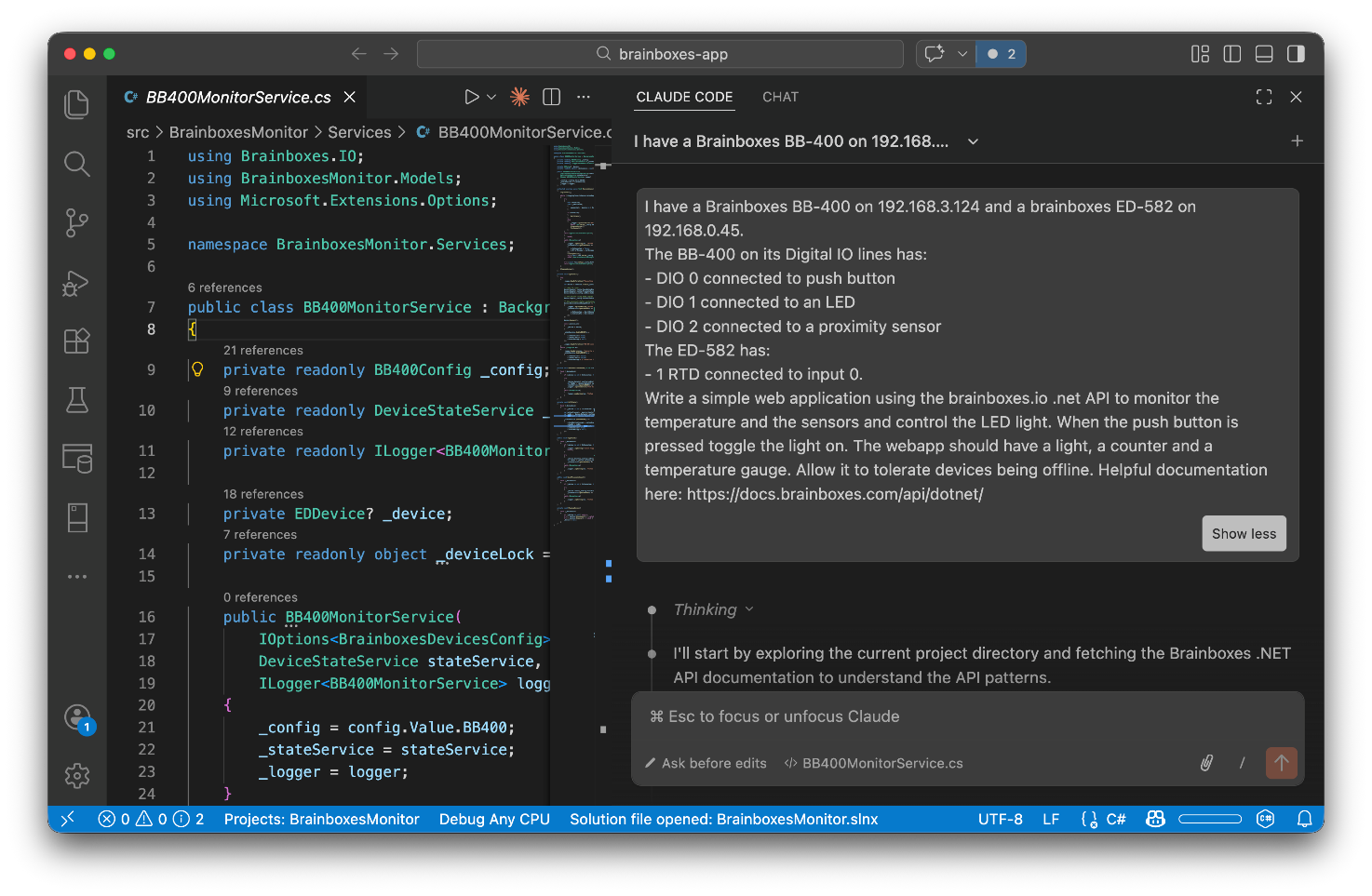
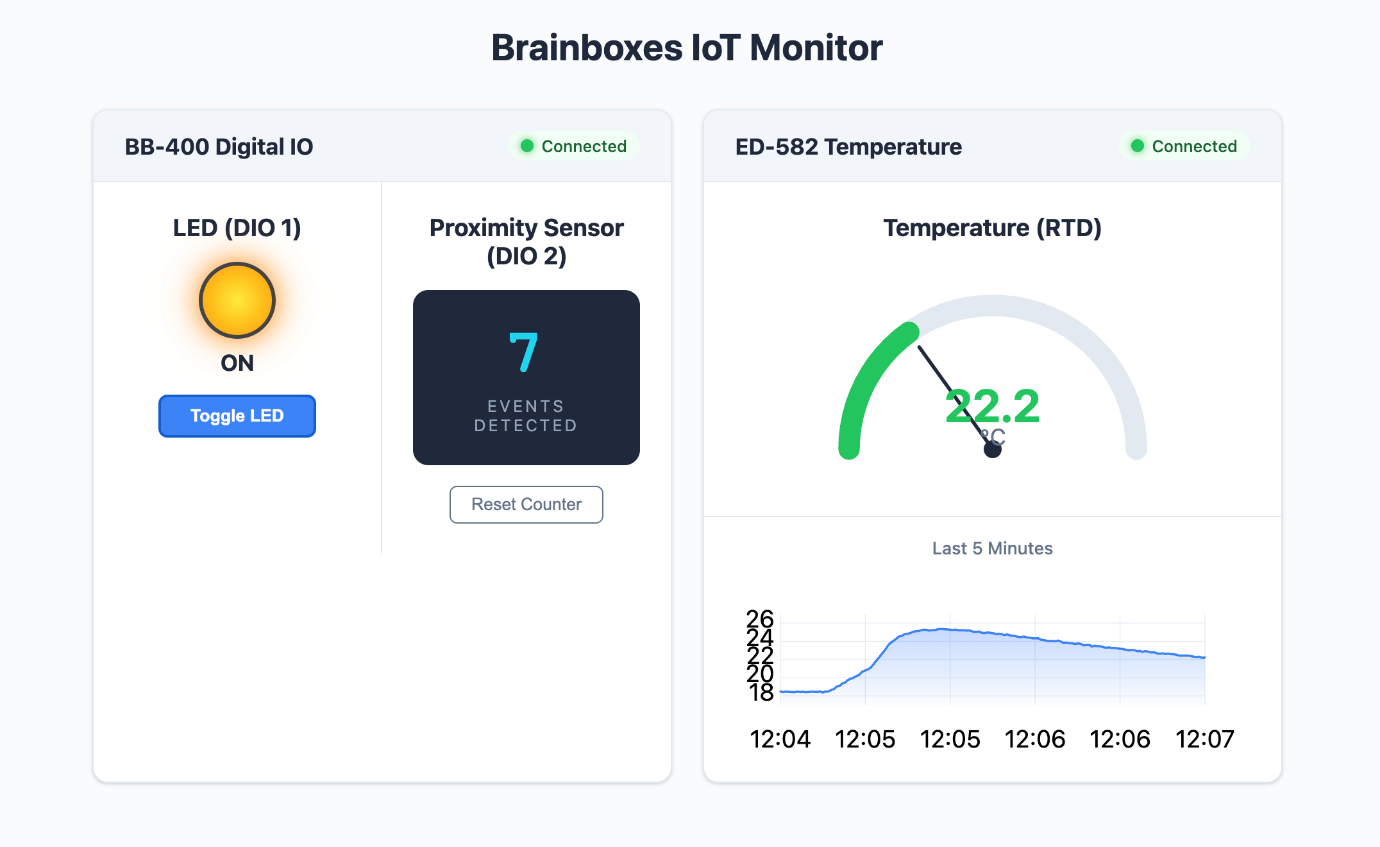
The AI agent read the documentation and planned the project structure from a single prompt. The prompt enabled the AI to build a web-based dashboard with a live temperature gauge, digital I/O button control, event counter, and historical temperature graphing. The AI assistant then deployed the finished application directly to the BB-400 over SSH, without requiring any manual coding.
For system integrators and OEM engineers, this represents a shift in early-stage development. Rather than spending days writing integration code, teams can quickly produce a working proof-of-concept to validate ideas, engage stakeholders, and clarify requirements. The result is not production-ready software, but it does accelerate the most time-consuming part of the process in getting something functional up and running.
The BB-400’s Linux foundation and open-source tooling run on industry-standard technologies. This allows AI agents to already understand the deployment environment without proprietary training. Equally important is the structure of the Brainboxes documentation itself. It includes comprehensive API references, logical organisation, example code, and is publicly accessible.
Walsh notes that AI-generated output may deliver “80% of the journey” to a finished application. The remaining 20%, including cybersecurity hardening, validation, optimisation, and compliance, still demands engineering expertise. However, by accelerating the starting point, organisations can allocate more resources to higher-value tasks.
Machine-readable documentation proves to be a decisive and competitive advantage. As AI coding assistants become embedded in engineering workflows, vendors that design platforms for humans and machine consumption will enable faster integration. This will ultimately shorten the overall development cycle and lower the barriers to industrial IoT adoption.
The real challenge for the industry is no longer the arrival of AI in industrial software development, but ensuring that platforms, APIs, and documentation are built to support this new reality.
Watch the full product demonstration here