

FAQs
What is Electromagnetic Interference (EMI)?
Electromagnetic interference (EMI), also known as radio frequency interference, is the disruption of an electrical circuit or device caused by an external electromagnetic source. This interference can lead to performance degradation over time or, in severe cases, cause the device to stop functioning entirely.
When electronic devices operate, they can emit unintended electromagnetic signals, which are the source of electromagnetic interference (EMI). These unwanted signals can disrupt or damage the operation of nearby electronic equipment. EMI can be classified into two main categories: naturally occurring and human-made. Examples of natural EMI include electrical storms, solar radiation, and cosmic noise. On the other hand, human-made EMI is generated by devices such as computers, radios, and power lines.
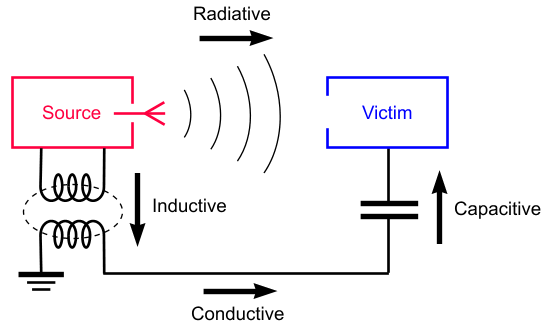
EMI can also be divided into two additional categories: radiated and conducted EMI. Radiated EMI, or radiated electromagnetic interference, occurs when unwanted electromagnetic energy is emitted from a source device and travels through the air as electromagnetic waves. This type of interference does not require a direct physical connection and can disrupt the operation of nearby electronic devices. Radiated RMI has two types of interference: narrowband and broadband EMI. Narrowband EMI refers to a type of interference that occurs within a single or narrow range of frequencies. Broadband EMI is frequently brought on by malfunctioning equipment and impacts a significant area of the radio spectrum at multiple frequencies. A common example of radiated EMI is when a faulty microwave oven interferes with a nearby Wi-Fi network.
Conducted EMI, or conducted electromagnetic interference, is a type of EMI that travels along conductive paths such as wires, cables, and PCB traces, rather than through the air. This form of interference is essentially electrical noise that moves through physical connections in a circuit and can cause malfunctions in other connected devices. A common example of conducted EMI is when a large motor switches on or off, generating a surge of electrical noise that travels through the power lines and disrupts other devices on the same circuit.
The best way to protect your devices from electromagnetic interference (EMI) is to use high-quality electronics from reputable manufacturers. At Brainboxes, we conduct in-house electromagnetic compatibility (EMC) testing to ensure our products perform reliably in real-world environments. This involves verifying both low emissions and strong resistance to external interference.
After internal testing, certification for the UK and European markets is carried out by Element, in line with the EN 55032 standard. EN 55032 focuses on the EMC of multimedia equipment, setting limits for electromagnetic emissions to prevent disruption to other devices and systems. For the US and Canadian markets, Eurofins handles the certification process to meet regional compliance requirements. Products featuring the MET mark symbolise compliance with the respective UL/CSA standards for the type of product and indicate compliance with the required standards by virtue of Eurofins’ equivalent NRTL accreditations to UL within the regulations of the United States and Canadian markets.
The MET mark is 100% equivalent to the UL mark, both of which are recognised in law by the United States Government. Both marks indicate conformance to NRTL standards.
You can read more about Nationally Recognized Test Laboratories (NRTL) and their importance here: https://www.brainboxes.com/faq/what-are-nationally-recognised-test-laboratories-nrtl-and-why-are-they-important
What are common signs that electromagnetic interference is affecting my device?
Common symptoms of electromagnetic interference include intermittent communication errors, unexpected device resets, data corruption, reduced wireless range, or issues that occur only when nearby electrical equipment is operating.
How can I reduce electromagnetic interference in my installation?
EMI can often be reduced by using shielded cables, ensuring proper grounding, separating signal and power cables, minimising cable lengths, and adding ferrite cores or EMI filters where necessary. This is useful if you work in an environment that is susceptible to EMI. EMI is more likely to occur in industrial or commercial environments that contain motors, relays, inverters, power supplies, or long cable runs. Areas with high radio frequency activity or shared electrical circuits can also increase the risk of interference.
Can EMI cause permanent damage to equipment?
In most cases, EMI causes temporary performance issues rather than permanent damage. However, severe or prolonged interference may contribute to component stress. Devices designed and tested for EMC compliance significantly reduce this risk.
What is the difference between EMI and EMC?
EMI (electromagnetic interference) refers to unwanted electromagnetic disturbances, while EMC (electromagnetic compatibility) describes a device’s ability to operate correctly without causing or being affected by EMI.
If you have any further enquiries about EMI/EMC, you can contact the Brainboxes Support Team: [email protected]
Related FAQs
Related Products
FAQs