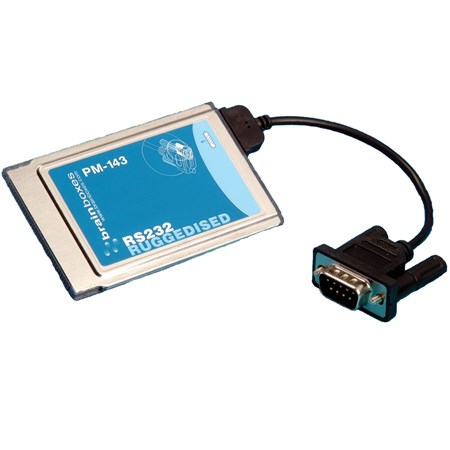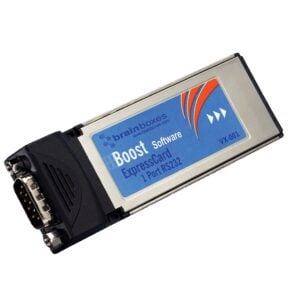

PM-143
1 Port RS232 PCMCIA with ruggedised integrated cable and 1 Mega-baud data rate
Description
PC Card providing one ruggedised RS232 serial port. Data transfer rates up to 921,600 baud rates and the 128 byte deep transmit and 128 byte receive FIFOS, coupled with 1Mbit/s line drivers deliver uncompromising performance on your laptop. Drivers for Windows 32 bit and 64 bit Operating Systems including Windows 95/98/2000, XP, Server 2003, Vista, Server 2008 and Windows 7.
Brief Specification
Ports
1
Protocol
RS232
UART
Brainboxes 16PCI950+
Max Baud Rate
921,600
Ruggedised
Yes
- Tech Spec
- Operating Systems
- Approvals
- Support
- Related Products
Port
Ports
1
Protocol
RS232
Connector
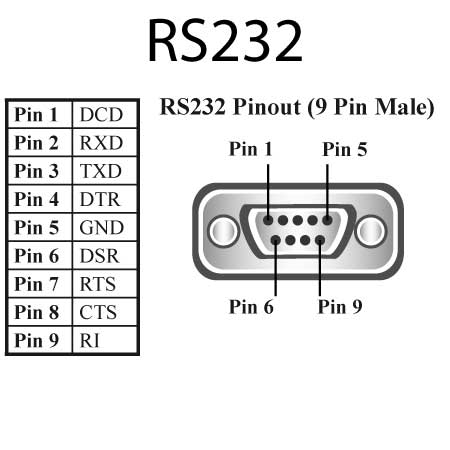
DB9 Connector - 9 Pin Male
UART
Brainboxes 16PCI950+
UART Compatibility
16750/16550/16450 backwards compatible as well as an enhanced 950 mode
Tx FIFO Size
128
Rx FIFO Size
128
Cable
Fully wired moulded cable
Port Settings
Max Baud Rate
921,600
Data Bits
5,6,7 or 8
Parity
Odd, Even, None, Mark or Space
Stop Bits
1, 1.5 or 2
Flow Control
RTS/CTS, DTR/DSR
Tx/Rx Modes
Point to Point
General
Ruggedised
Yes
PCB Layers
4
Power Consumption
210mA @ 5V , 20mA @ 12V
Product Weight
0.05 kg, 0.11 pounds
Product Dimensions
85(l) x 54(w) x 5(h) mm, 3.35(l) x 2.13(w) x 0.20(h) inches
Packaged Weight
0.16 kg, 0.35 pounds
Packaged Dimensions
150(l) x 40(w) x 145(h) mm, 5.91(l) x 1.57(w) x 5.71(h) inches
GTIN-12
837324000139
Interface

PCMCIA
PCMCIA (Personal Computer Memory Card International Association) is an international standards body and trade association with over 100 member companies that was founded in 1989 to establish standards for Integrated Circuit cards and to promote interchangeability among mobile computers where ruggedness, low power, and small size were critical. Change